
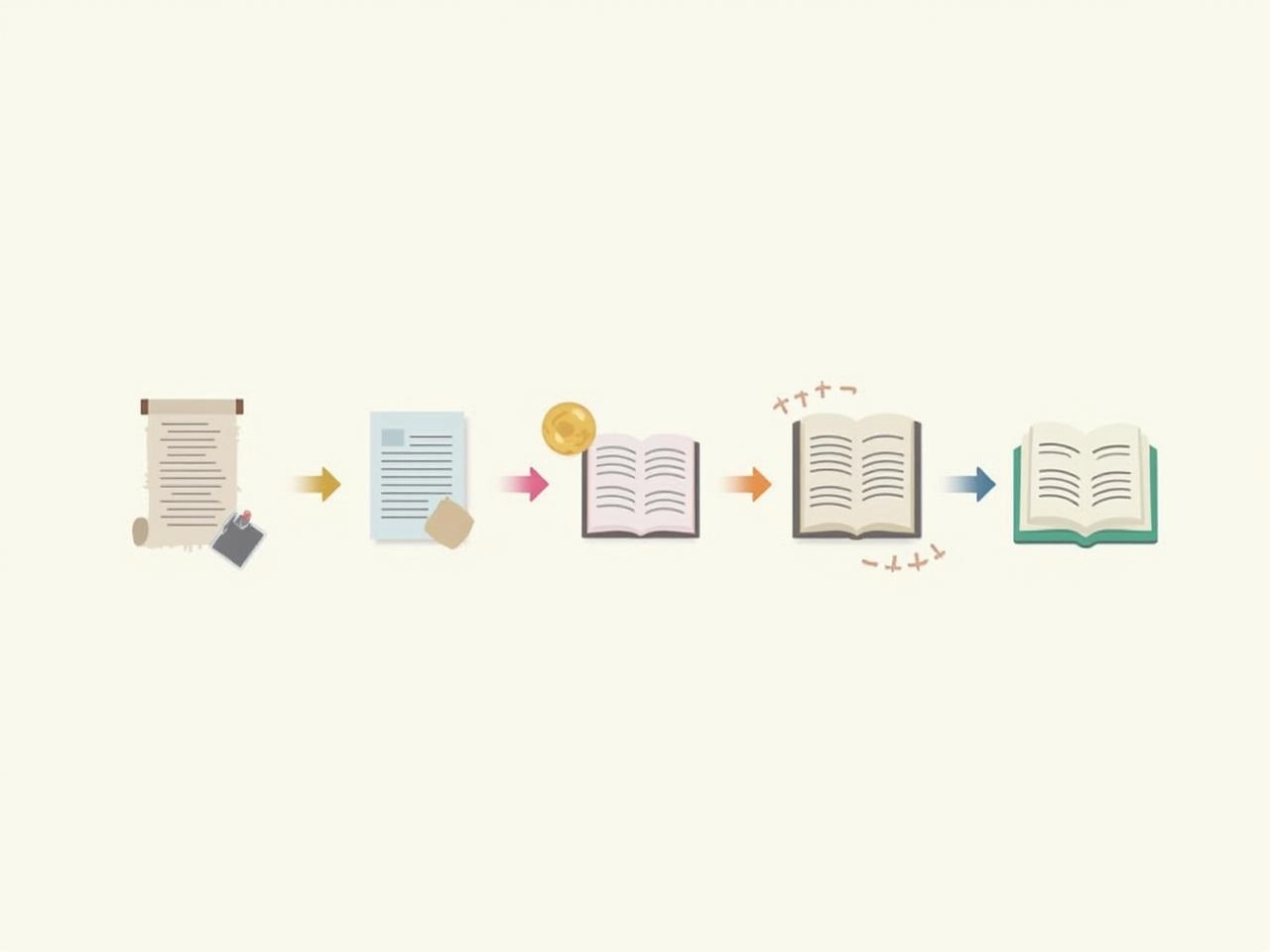
A professional book design is a methodical, multi-phase project, not a single task. It begins long before the first line of text is placed and concludes only after the final files have passed quality checks. Authors should approach this as a structured, five-phase process, ensuring each stage—from manuscript preparation to final export—is executed flawlessly to yield a polished, print-ready publication.
Phase 1: Manuscript Preparation and Assessment
The design process must start with a clean manuscript. The designer assesses the material to understand its structure, word count, and unique design requirements.
Key Preparation Steps:
Phase 2: Interior Concept and Template Creation
The designer builds the book’s foundational template based on the manuscript’s needs and the target market’s conventions. This is the crucial step where E-E-A-T is established visually through sophisticated typography.
Setting the Foundational Grid
This involves selecting the primary font pairings (text and headings), calculating ideal margins and leading (line spacing), and setting up the text block (the “type area”). The goal is to create a seamless reading rhythm that supports the content.
The Template Components:
- Running Heads and Folios (Page Numbers): Determining placement and styling for consistency.
- Chapter Starts: Designing the unique treatment for chapter titles and section breaks.
- Front and Back Matter: Creating professional templates for the Title Page, Copyright Page, and other ancillary sections.
Phase 3: Text Flow and Typesetting
The manuscript text is imported into the template, and the intensive typesetting work begins. This is the stage where technical expertise ensures maximum readability.
Typesetting for Readability
- Initial Import: Text is flowed into the template, and pre-defined paragraph/character styles are applied.
- Typesetting and Correction: Correcting widows, orphans, rivers, and adjusting hyphenation and justification settings for optimal reading flow [CITATION NEEDED].
- Refinement: Precisely placing and anchoring any internal images, charts, or tables so they move correctly within the text.
Phase 4: Proofing and Author Review
The fully formatted draft is delivered to the author for final review. Crucially, this is for catching layout errors, not content errors.
Layout Quality Assurance
- Review Focus: The author should check for missing text, incorrect chapter numbering, misaligned tables, or font issues that may have occurred during the import process.
- Iterative Revisions: Implementing small typographical corrections. Major text edits should be avoided as they often necessitate a full re-pagination, incurring additional time and cost.
Phase 5: Final File Generation and QC
The design is finalized, and print-ready files are generated according to the chosen print-on-demand or offset printer specifications (e.g., KDP, IngramSpark).
Final QC and Export Checklist
- PDF/X Standard: Exporting the interior as a high-resolution PDF/X-1a or similar print-specific standard for guaranteed print quality.
- Embedded Fonts and Images: Verifying all elements are correctly embedded and at 300 DPI resolution to prevent fuzzy printing.
- Correct Bleed/Margins: Confirming the file size precisely matches the printer’s required dimensions for the chosen trim size and bleed setting.
FAQ: Book Design Timeline
Q: How long does the professional book design process typically take? A: For a standard novel or non-fiction book, the process usually takes 2 to 4 weeks, depending on the complexity (tables, images, references) and the author’s speed in the review phase.
Q: Should I hire a separate person for the cover and the interior? A: Yes. Cover design and interior layout are distinct specializations. While some designers do both, hiring experts for each ensures the highest level of craftsmanship for both the book’s marketing (cover) and user experience (interior).
